

Agentic AI is attracting a lot of interest. The idea of autonomous systems that can think, plan, and act on our behalf is exciting. However, developing reliable agent-based systems entails more than simply adding autonomy to existing workflows. It’s an engineering challenge- that necessitates thoughtful design decisions, robust architecture, orchestration, and reliability from the very beginning — ensuring agents operate not just in isolated demos, but also reliably, consistently, and at scale in production. This is particularly urgent now. Gartner predicts that over 40% of Agentic AI projects will be canceled by the end of 2027 due to escalating costs, unclear business value, or inadequate risk controls. While these reasons aren’t always purely technical, many failures stem from systems that weren’t engineered to be reliable and scalable. If reliability isn’t engineered from the start, your Agentic AI project might fail before it ever offers value.
Many enterprises address these challenges by working with specialized Agentic AI development services that focus on building reliable, production-ready agent architectures from the ground up.

To address these risks, our AI experts shared hard-earned insights from real-world Agentic AI implementations in recent webinars. I have pulled those insights together in this article as best practices so that you can apply them while engineering reliable Agentic AI systems.
(And if you wish to go deeper, you can access the full webinars recording here)
Putting these best practices into action begins with systems thinking i.e. designing every aspect of your Agentic AI to function together reliably from the outset.
Start with system thinking
Agentic AI’s reliability is determined by how well all of its components are designed to work together.
Chaining, fallback mechanism, and modular orchestration
One of the biggest shifts in mindset is moving from rigid workflows to dynamic agent orchestration. This implies that your system should be able to construct workflows based on the task at hand. This includes:
Chaining
Agents seldom act alone. They need to pass context, decisions, or outputs from one to the next. A well-designed chain ensures seamless handoffs, so the overall system continues to function smoothly.
Fallback mechanisms
Even the best agent can fail. A reliable system includes contingency plans that activate when a primary plan fails. Like escalating to a human, rerouting to another agent, or triggering an alternate path — it prevents the agent from stalling/failing the entire workflow.
Modular orchestration
Reliable agentic systems cannot be built as a single large block. The smarter approach is modular- break complex processes into smaller, manageable modules, each with a clear, narrow scope. This not only makes the system easier to build, test, and maintain, but it also adds flexibility.
As our webinar (Will Agentic AI Replace or Reinvent SaaS?) explained, agent workflows can be dynamically built with three main components: a rule book, connected data sources, and tools. With this setup, when business logic changes, there’s no need to rebuild the system. The agent flow adapts automatically as per new rules.

Keep the architecture flexible for foundational models
Don’t tie yourself to a single LLM. The agentic landscape is evolving too quickly, and different models excel at different tasks. Your system design should be flexible enough to allow for different LLMs to be used for various specialized agents. This optimizes for both performance and cost.
As explained in the Beyond LLMs: The Power and Pitfalls of Multi-Agent AI webinar, the real advantage comes from creating a system that can “optimize for both performance and cost” by matching the right model to the right task. This foresight in architecture ensures your system remains cutting-edge and cost-effective as the AI market matures.

Build on reliable infrastructure
Your Agentic AI system is only as good as the infrastructure it runs on. That includes not just servers or cloud environments, but the entire foundation – reliable data access, context management, and tool integration. Agents need to operate without interruption, and that requires a solid foundation.
The key is in connected data sources. Your agents must be able to pull from diverse sources – databases like MongoDB or Postgres, third-party APIs, legacy systems, or unstructured files— without breaking workflows.
When your infrastructure enables this seamless integration, agents can perform tasks consistently and transform raw data into actionable intelligence.
The Cloudera survey backs this up: 66% of enterprises rely on enterprise AI platforms to build and deploy agents, and 60% embed agents directly into core applications. Seamless integration isn’t a “nice to have”—it’s what turns existing data into reliable, actionable intelligence.
Manage complexity and mitigate hallucination
One of the biggest problems with LLMs is hallucination. They’ll confidently make up answers that sound right but aren’t. In an autonomous agent system, that’s not just inconvenient — it’s a failure point. The way you design your system determines whether hallucinations stay rare and contained or spiral into something catastrophic.
Bias compounds the problem. Over half of enterprise leaders (51%) say bias in AI systems is a major concern, and accountability becomes murky when you put agents in charge of mission-critical tasks. But there are ways that help prevent chaos.
Specialize your agents
Stop trying to build a super-agent that does everything. That’s where complexity runs away from you. Instead, design agents with narrow, well-defined roles. Smaller scope means better control of outputs and lower risk of error.
Take setting marketing campaign as an example. Instead of one agent trying to plan, create, and measure an entire campaign, you’d split that work into:
- a content generation agent,
- a channel distribution agent,
- and a performance monitoring agent.
Each one does less, but does it better. That modularity makes the system easier to reason about and a lot less likely to hallucinate.
Leverage high quality AI-ready data and transparency
High quality data is essential. Use diverse, unbiased, and well-curated datasets to train your agents; this eliminates systemic bias and enhances accuracy.
Transparent thinking is just as essential. Implement explainable AI (XAI) strategies to ensure that your agents’ decisions are transparent and auditable. Stakeholders should understand why an agent made a recommendation or took a certain action. Transparency not only fosters confidence, but it also assures compliance and responsibility when agents work in mission-critical workflows.
Choose the right collaboration model
Specialized agents only get you so far. You still need a plan for how they’ll work together. That’s where structure matters:
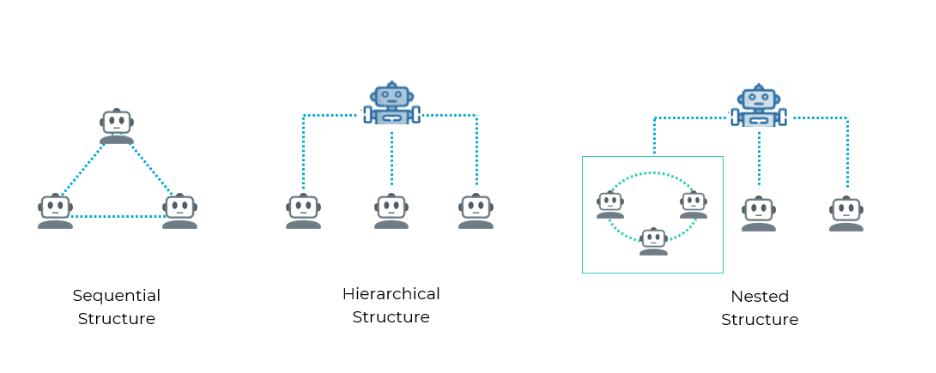
- Sequential- Agents pass outputs along a straight line. Works for simple, predictable processes.
- Hierarchical- A master agent delegates, sub-agents execute, and results roll back up. Useful for complex but structured tasks.
- Nested- Agents can create new agents to handle sub-tasks. Flexible, adaptive, and the right choice when workflows are unpredictable.
The collaboration model you pick directly impacts reliability. Get it wrong and you’ll end up with brittle chains or runaway complexity. Get it right and you’ll have a system that scales cleanly, with each agent contributing its expertise without stepping out of bounds.
Keep humans in the loop for strategic oversight
Autonomy doesn’t eliminate the need for people — it makes their role more important.
A human-in-the-loop isn’t a weakness. It’s a design choice that builds trust in Agentic AI. The principle is simple: for high-stakes decisions, humans stay in the approval chain. That could mean a marketing lead reviewing AI-generated campaign ideas before launch. Or a compliance officer checking an automated decision against policy.
The goal isn’t to slow things down — it’s to keep brand safety, compliance, and accountability intact. You get the speed and scale of agents without losing the assurance that critical actions still align with human judgment.
Test relentlessly, monitor continuously
If you’re going to put Agentic AI into production, reliability isn’t optional—it’s the whole game. When decisions are made autonomously, you need absolute confidence that the system does what it’s supposed to do, every single time.
Robust testing and validation
Reliability is paramount. The only way to get there is through serious testing and validation. There’s no widely accepted framework for multi-agent systems yet. But that doesn’t change the fact: robust testing is critical if you want a production-ready application.
Some teams use LLMs as “judges” to check output quality, but the bigger point is this—your approach needs to be systematic. Your agents must perform accurately and consistently under real-world conditions.
Continuous monitoring and evaluation against KPIs
And reliability doesn’t stop at launch. Agentic AI isn’t a set-it-and-forget-it system. You need continuous monitoring tied to business KPIs—task completion, efficiency, accuracy, or whatever matters most to your business. Tracking these metrics in real time gives you early warning signals when things drift, while letting you optimize performance along the way.
Prioritize user experience (intuitive and scalable)
The smartest system in the world won’t matter if people hate using it. The human interface is where trust is won or lost. If employees or customers can’t interact with your agents in a way that feels natural, adoption stalls. Natural language capabilities and clean, intuitive design aren’t nice-to-haves — they’re table stakes.
And then comes scale. Your agents may work perfectly today, but what happens when usage doubles? Or when ten times the data flows through the system? A scalable agentic AI architecture isn’t about throwing more hardware at the problem; it’s about designing for efficiency from the start. The right foundation lets you handle higher demand without higher costs. Fail here, and growth becomes a liability.
Conclusion
Agentic AI has huge potential, but potential doesn’t pay the bills. Reliability does. The companies that win with Agentic AI will be the ones that engineer systems that are safe, consistent, and scalable from day one—not the ones that chase hype with fragile prototypes.
The path is clear: modular design, flexible architecture, robust testing, and human oversight where it counts. Get those right, and you unlock speed, scale, and real business impact. Get them wrong, and you’ll end up with ballooning costs, brittle systems, and stalled adoption.